
Societal Resilience: Joint Seminar by Boryviter and Vilnyy Vybir “The Human Dimension: The Ukrainian Experience of Protracted War”
A team of psychologists from Boryviter’s “The Human Dimension” Line of Effort, together with the Public organization “Psychological Support and Rehabilitation Vilnyy Vybir”, conducted an educational seminar titled “The Human Dimension: The Ukrainian Experience of Protracted War” in Stockholm, Sweden, at the invitation of the Swedish Defence University (SEDU).
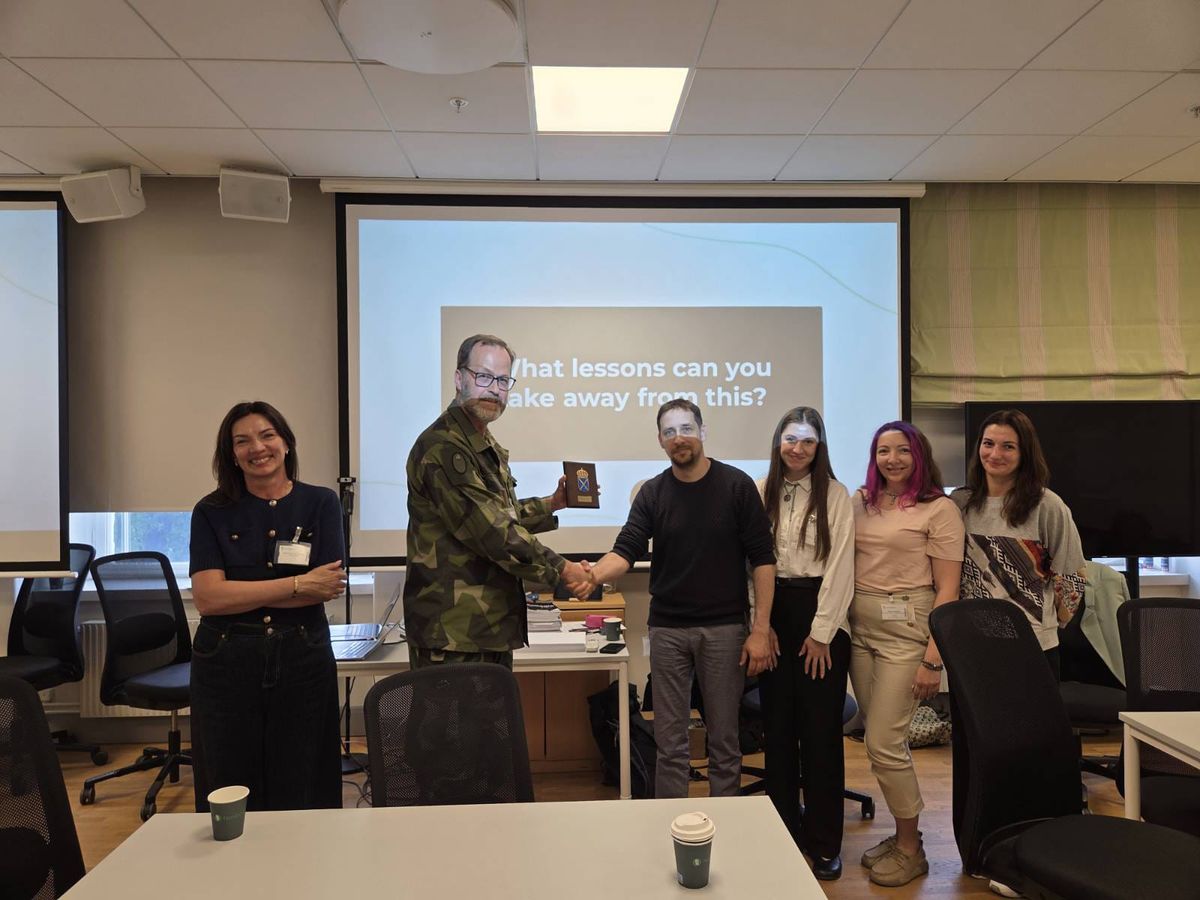
A team of psychologists from Boryviter’s “The Human Dimension” Line of Effort, together with the Public organization “Psychological Support and Rehabilitation Vilnyy Vybir”, conducted an educational seminar titled “The Human Dimension: The Ukrainian Experience of Protracted War” in Stockholm, Sweden, at the invitation of the Swedish Defence University (SEDU).
The event gathered representatives from Swedish defence structures, state bodies, and other security sector institutions to address a critical societal challenge: how human capital and governance systems maintain functionality under the conditions of a multi-year war of attrition. Prolonged, high-intensity combat operations impose an unprecedented cognitive load on personnel, necessitating a shift from situational solutions to systemic doctrinal adaptation.
The two-day programme combined analytics, practical case studies, and scenario-based group work (wargames). On the first day, the Boryviter team invited participants to immerse themselves in various phases of the war, assume the roles of different elements within the system, and reflect on questions that have long become a reality for Ukraine:
- How to sustain the motivation to resist?
- How to maintain trust in conditions of uncertainty?
- How to prepare society not for a short campaign, but for a multi-year confrontation?
- How to prevent fragmentation when fatigue becomes the new norm?
On the second day, Vilnyy Vybir experts shared over 11 years of practical experience operating in wartime conditions, presenting key mental health challenges faced by military personnel and civilians during prolonged combat. Special attention was given to moral injury, psychological resilience, the management of mental disorders during wartime, and societal crisis preparation.
Speakers emphasised that the systemic preparation of a population for crises is impossible without developing psychological literacy, personal responsibility, and robust support networks. The Ukrainian experience demonstrates that societal readiness directly influences emotional resilience and the state's capability to respond to threats effectively.